.svg)
Nurturing digital wellbeing & mindfulness through design
Brief
Design for Digital Wellness refers to being physically, socially, and emotionally healthy in a technology-centered world. It requires us to keep the stress and problems associated with social media and digital dependency at bay. While social media is perceived as a source of happiness, 24X7 connectivity is what everyone is aiming for. But in a day and age where we check our phones every 4 minutes, 344 times a day, digital wellness has become more important than ever.
Tools
Figma
My contributions
User research, Product design, UX Design, UI Design
Timeline
March 2023 - April 2023
Empathize
Decoding the brief
The first step was to identify keywords from the brief to explore and gain a deeper understanding of the brief, which would direct the secondary research.
.png)
What are we looking for?
We aimed to achieve the following objectives through our research.
.png)
Secondary Research
We began the research process with literature review and mapped our findings.

What is the problem?
Primary Research
We conducted an online survey and user interviews.
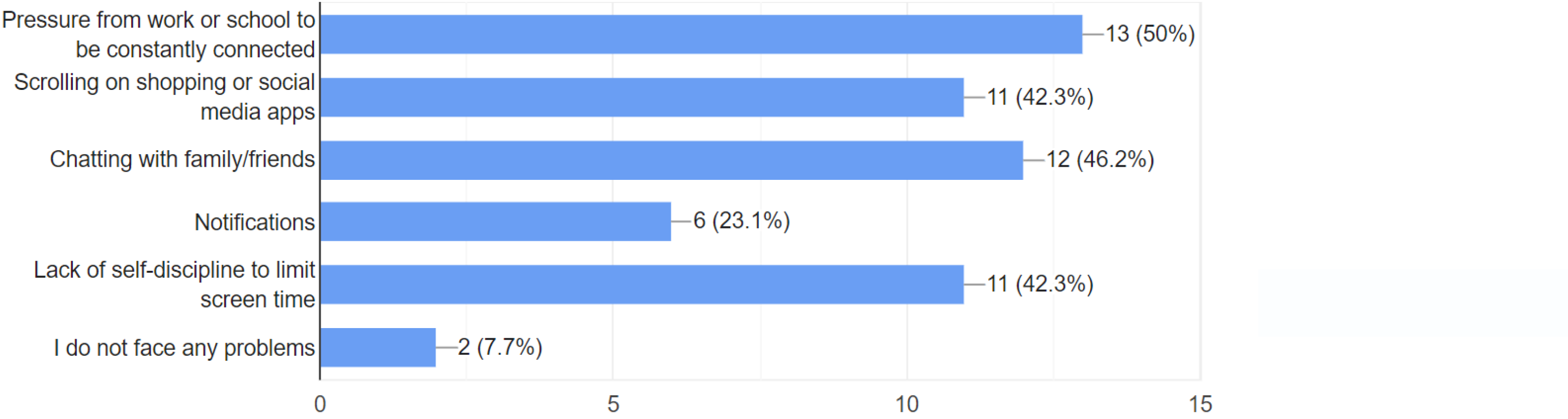
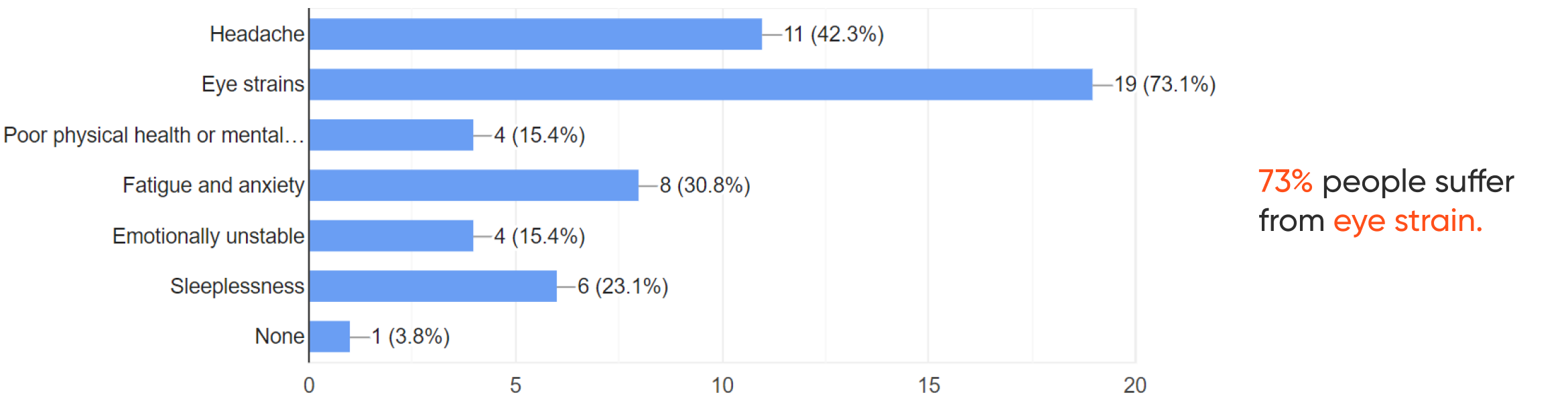
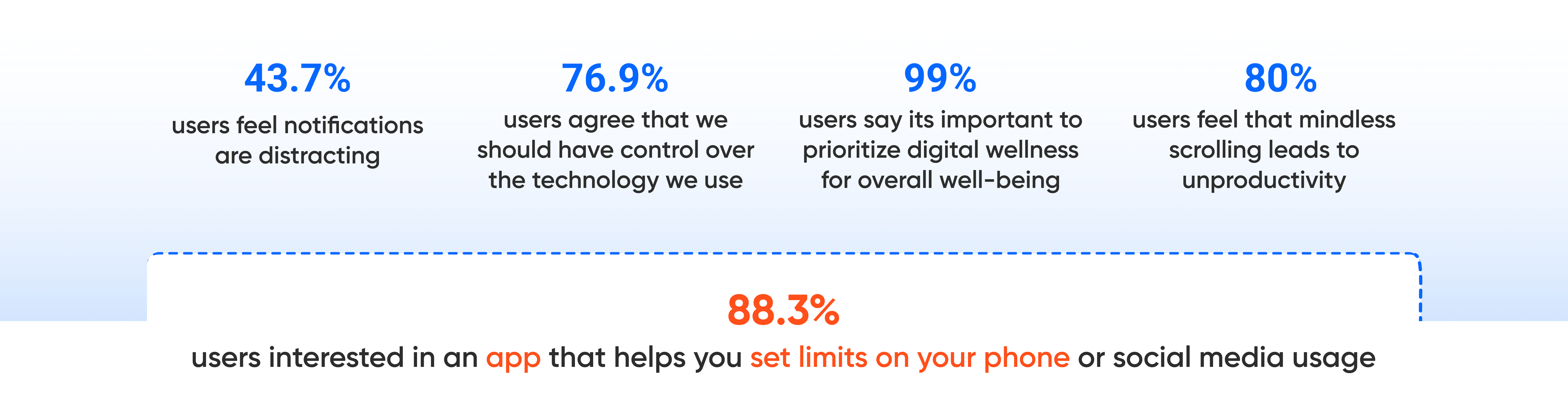
A questionnaire was circulated as a part of primary research to understand the digital wellbeing behavior of individuals. The survey received 26 responses in total. The primary objective of the survey was to understand how individuals use digital devices and technology in their daily lives, and the impact it has on their overall wellbeing.
Who is impacted the most?
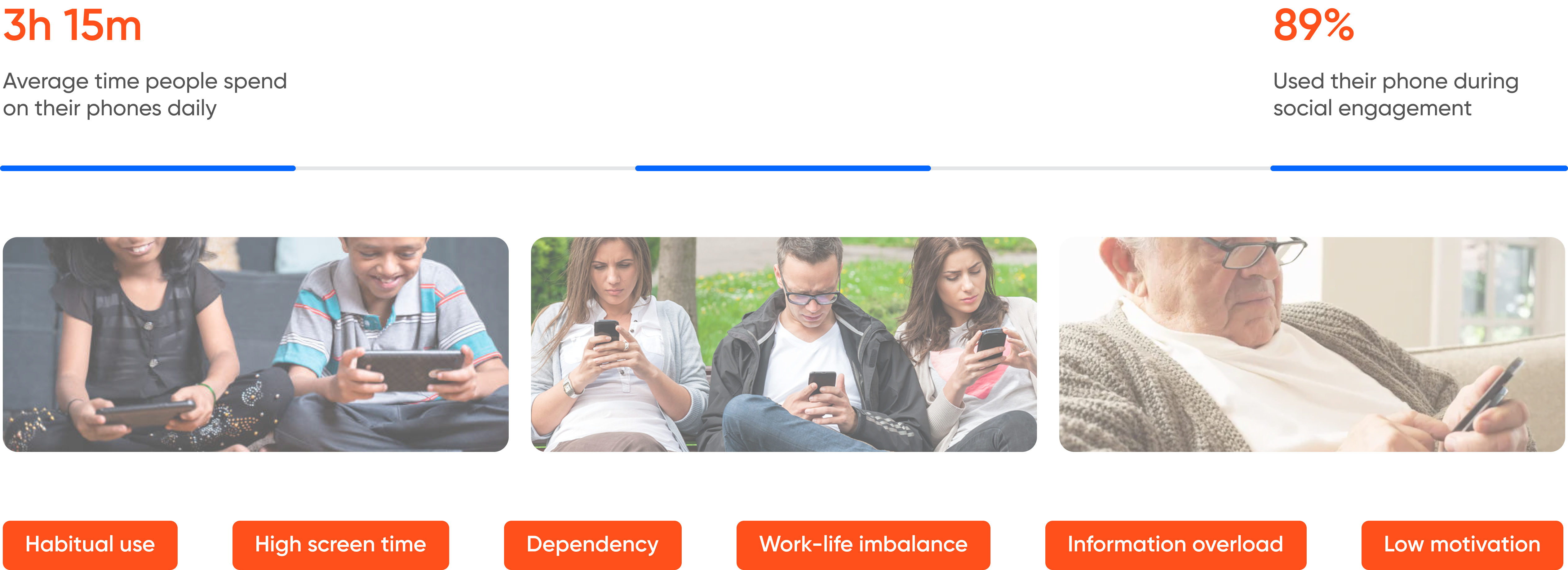
After understanding the problem and it’s relevance, we looked at how different age groups were impacted by phone usage.

What is the average time spent on phones each day?

What are the problems you face in unplugging the screen?
What are problems do you face due to excessive usage of technology?

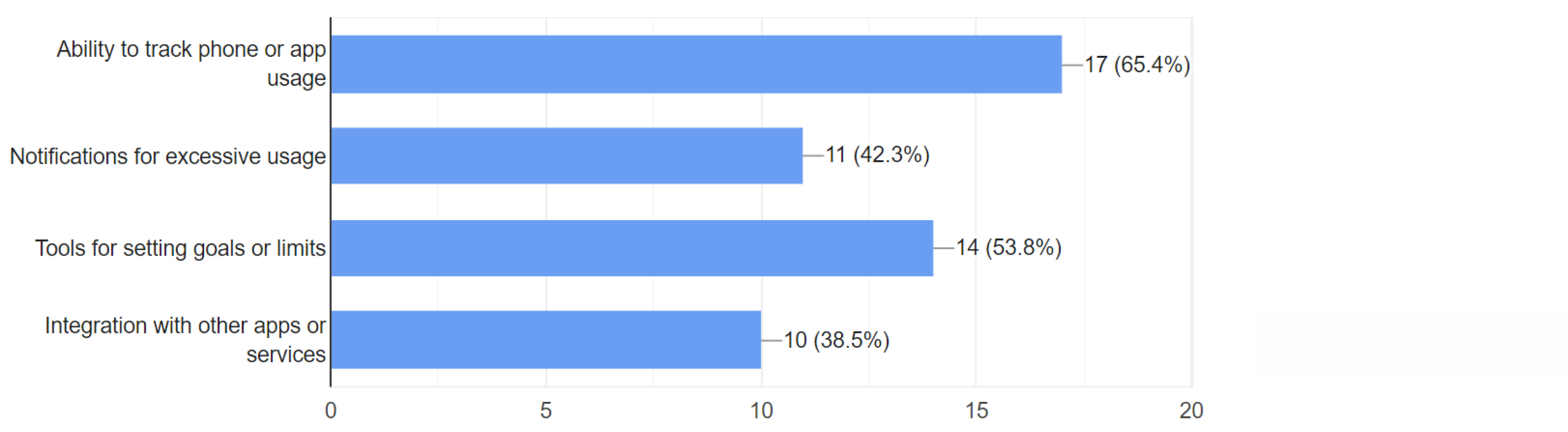
What features would you want in an app that promotes digital wellness?
Have you ever used an app or tool to limit your digital device usage?

Interview Insights
.png)
Empathize → Define
User Personas
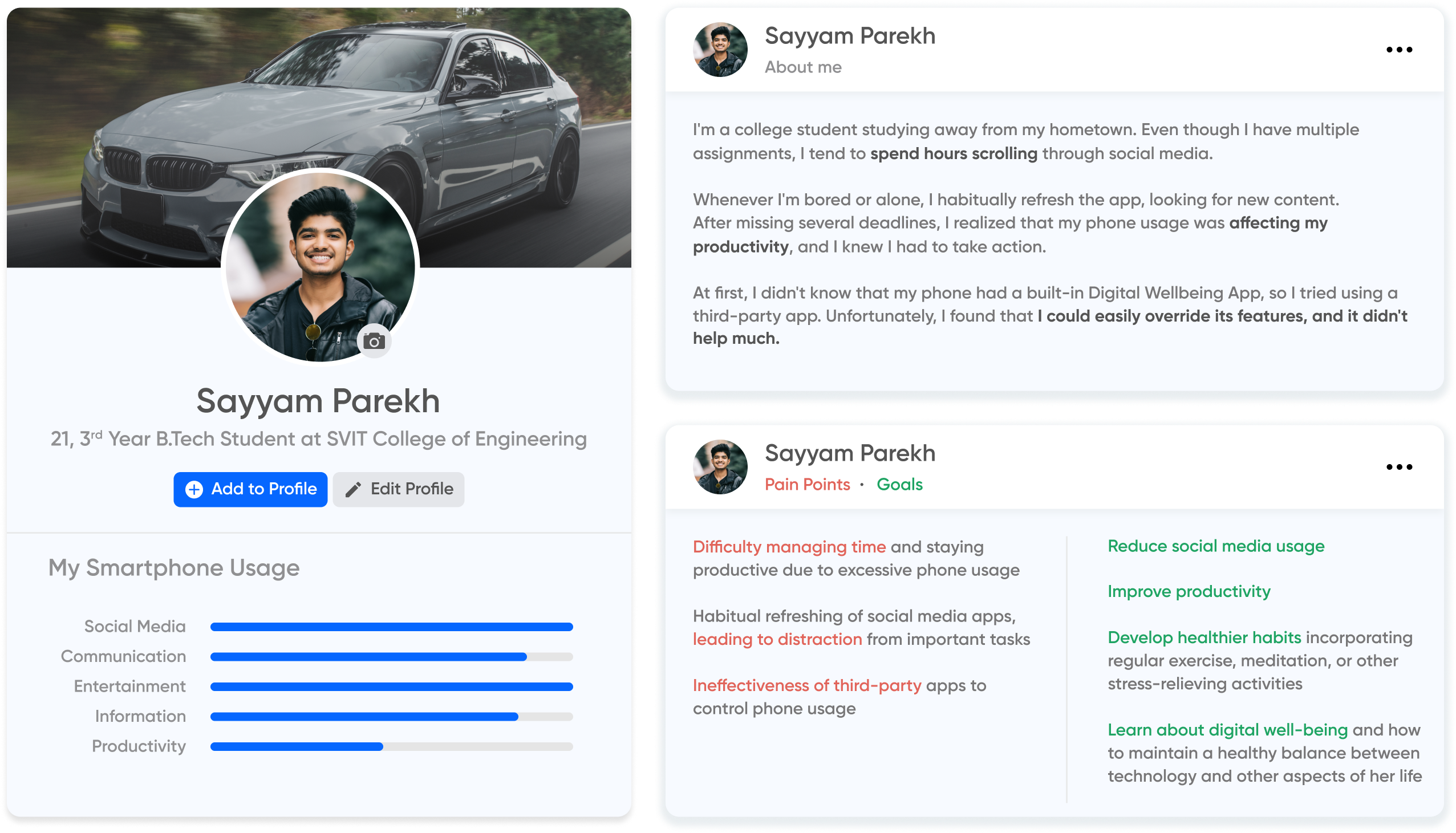
After through run-through of our research and surveys, we created user personas.
.png)
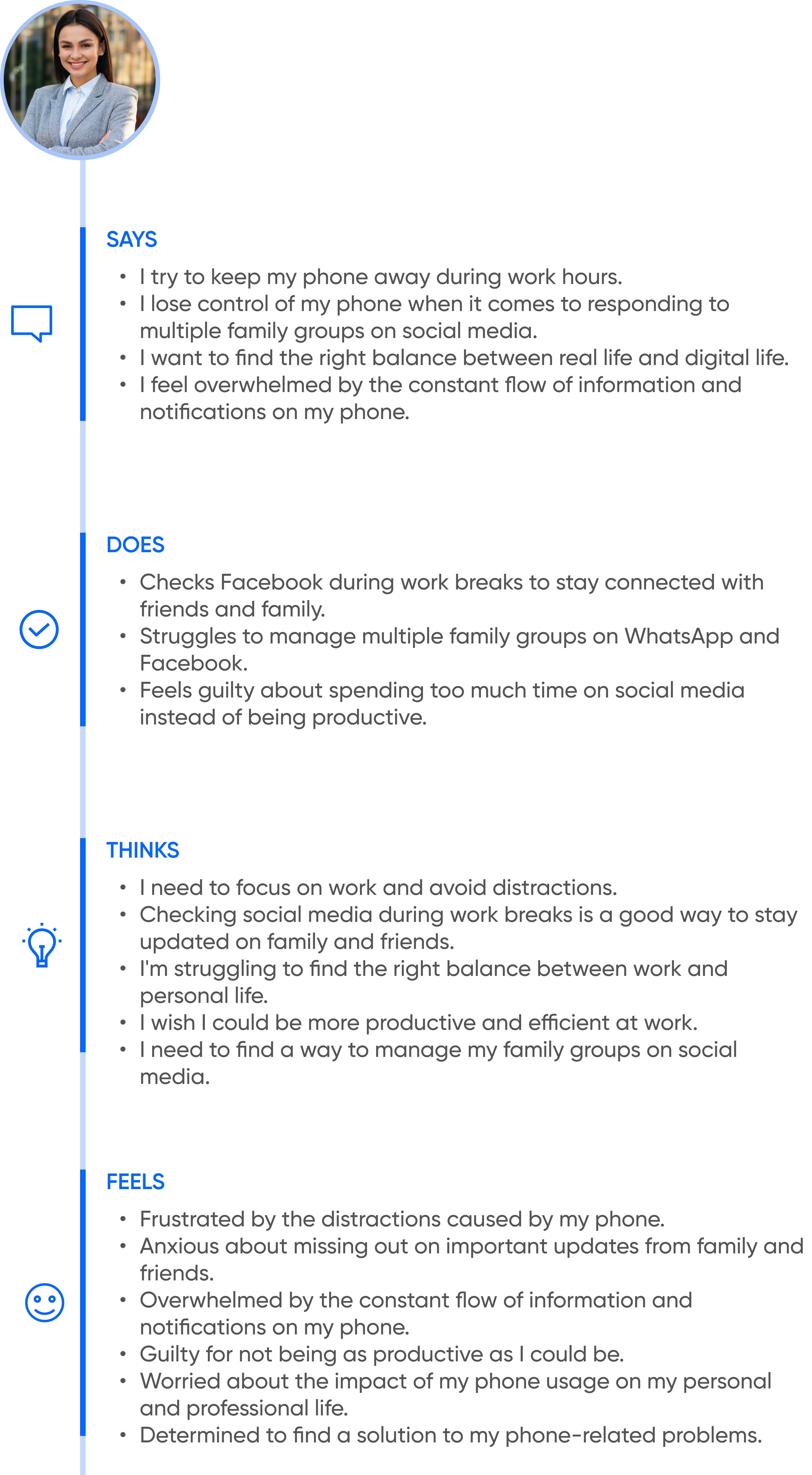
Empathy Maps
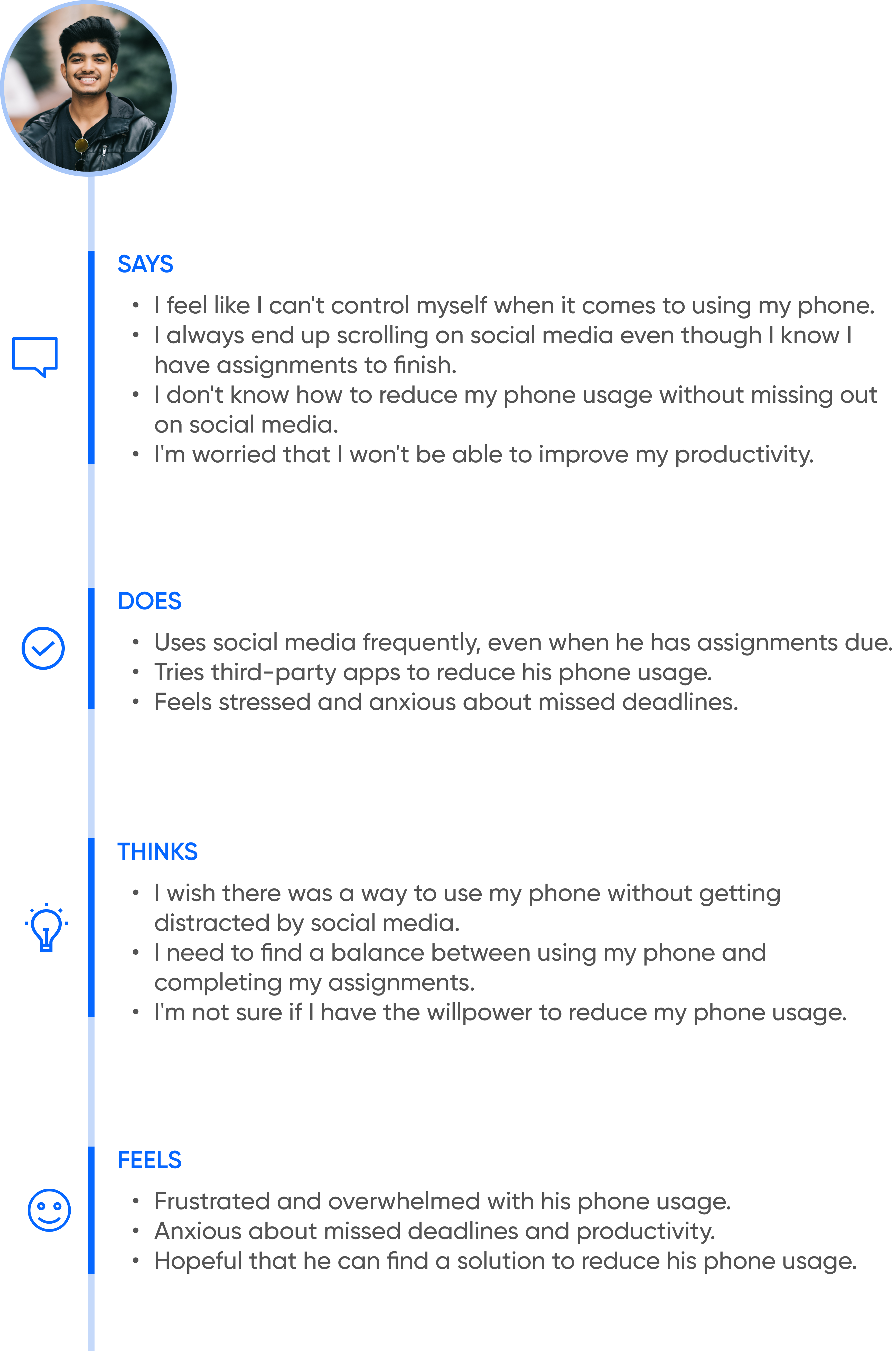
Empathize → Define → Ideate
Information Architecture
Our empathy mapping helped us identify key areas of action with respect to the user’s phone usage. Using those, we ideated for features to include in the final product. We then structured our features.
.png)
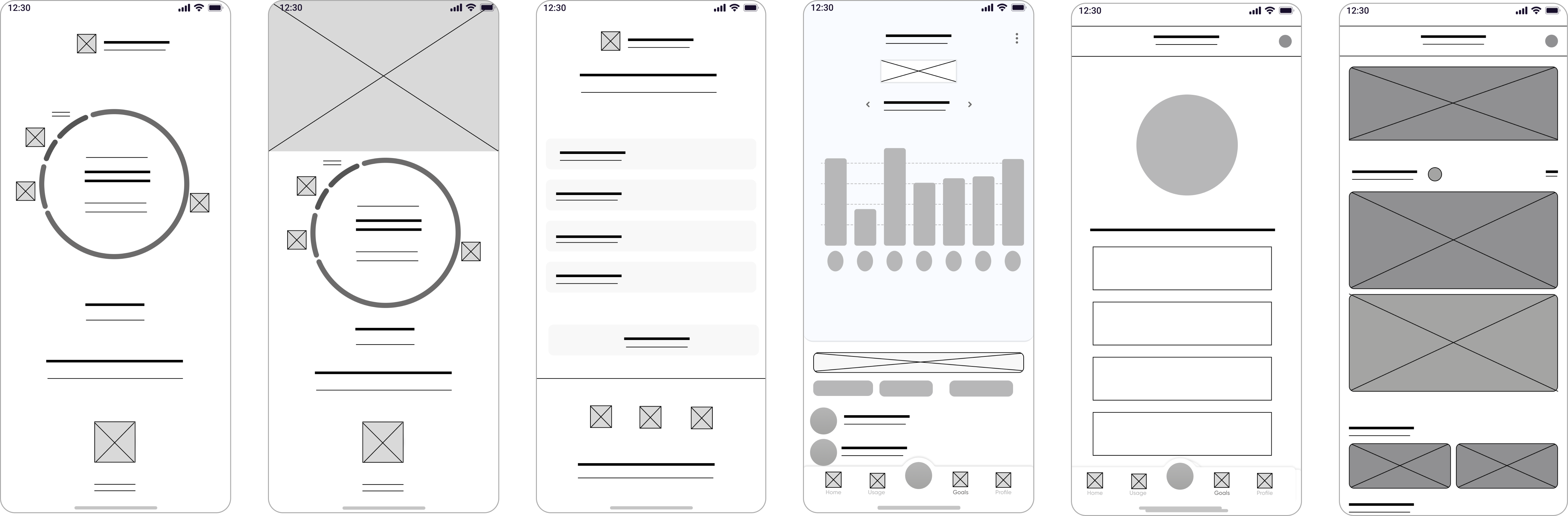
Low-fidelity wireframes
Translating to screens.
Principles of Cognitive Psychology were strictly followed while designing the low fidelity wireframes of the screens, such as:
- Gestalt Principles
- Mental Models
- Cognitive Load and
- Reachability (Rule of Thumb)
Empathize → Define → Ideate → Design
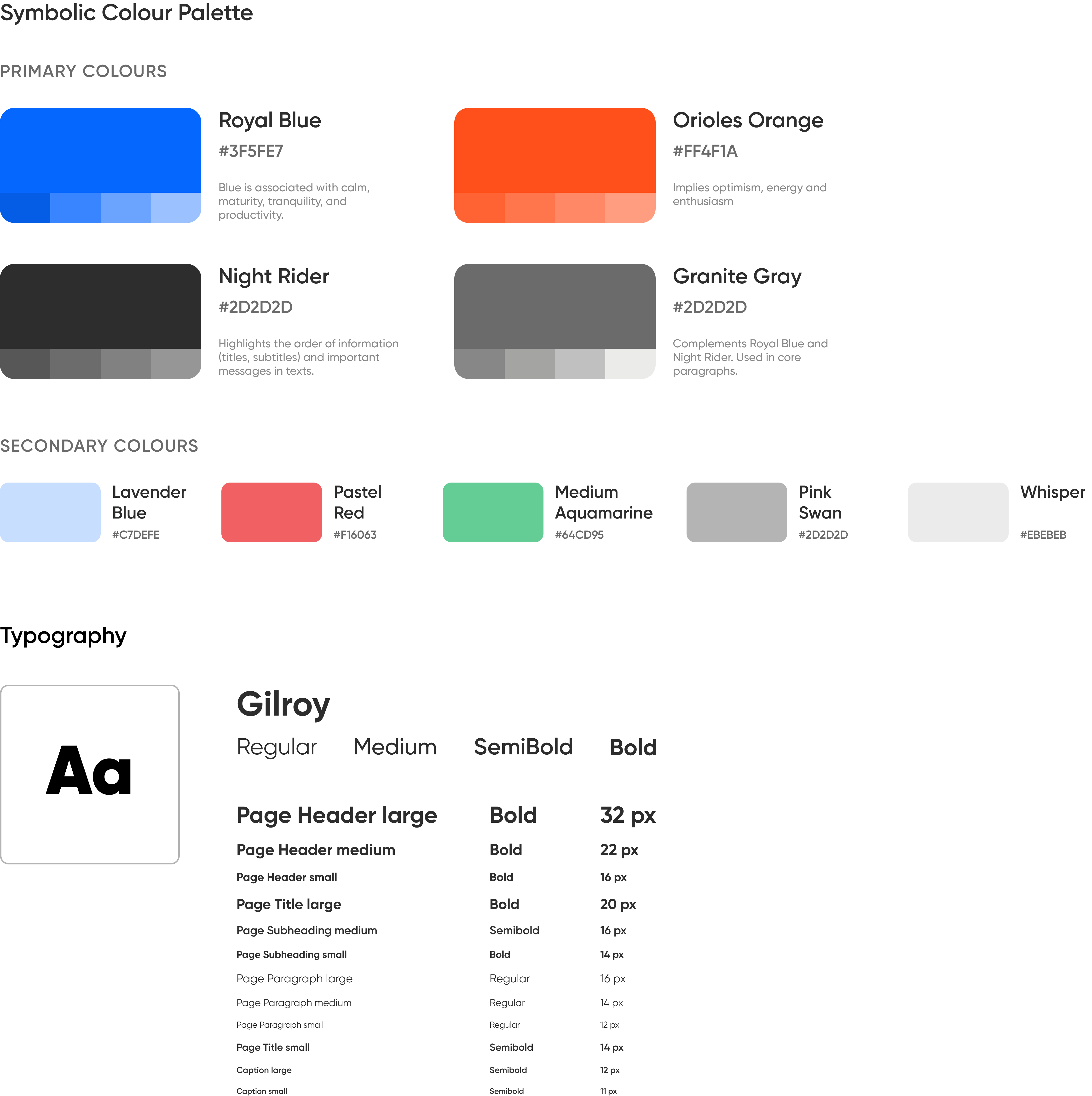
Design Language
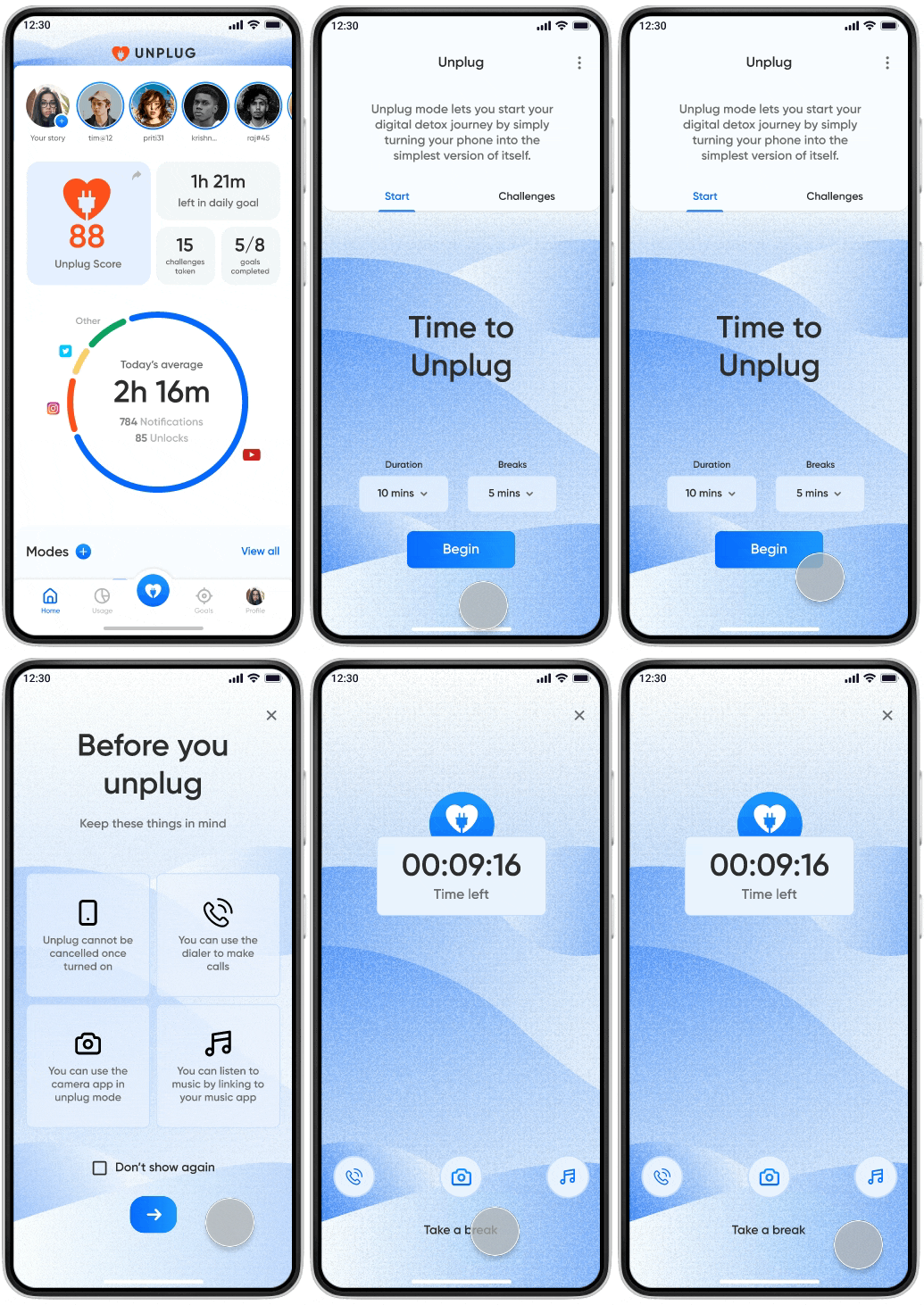
High-fidelity Wireframes
Onboarding

Home screen

Track usage

Unplug Mode
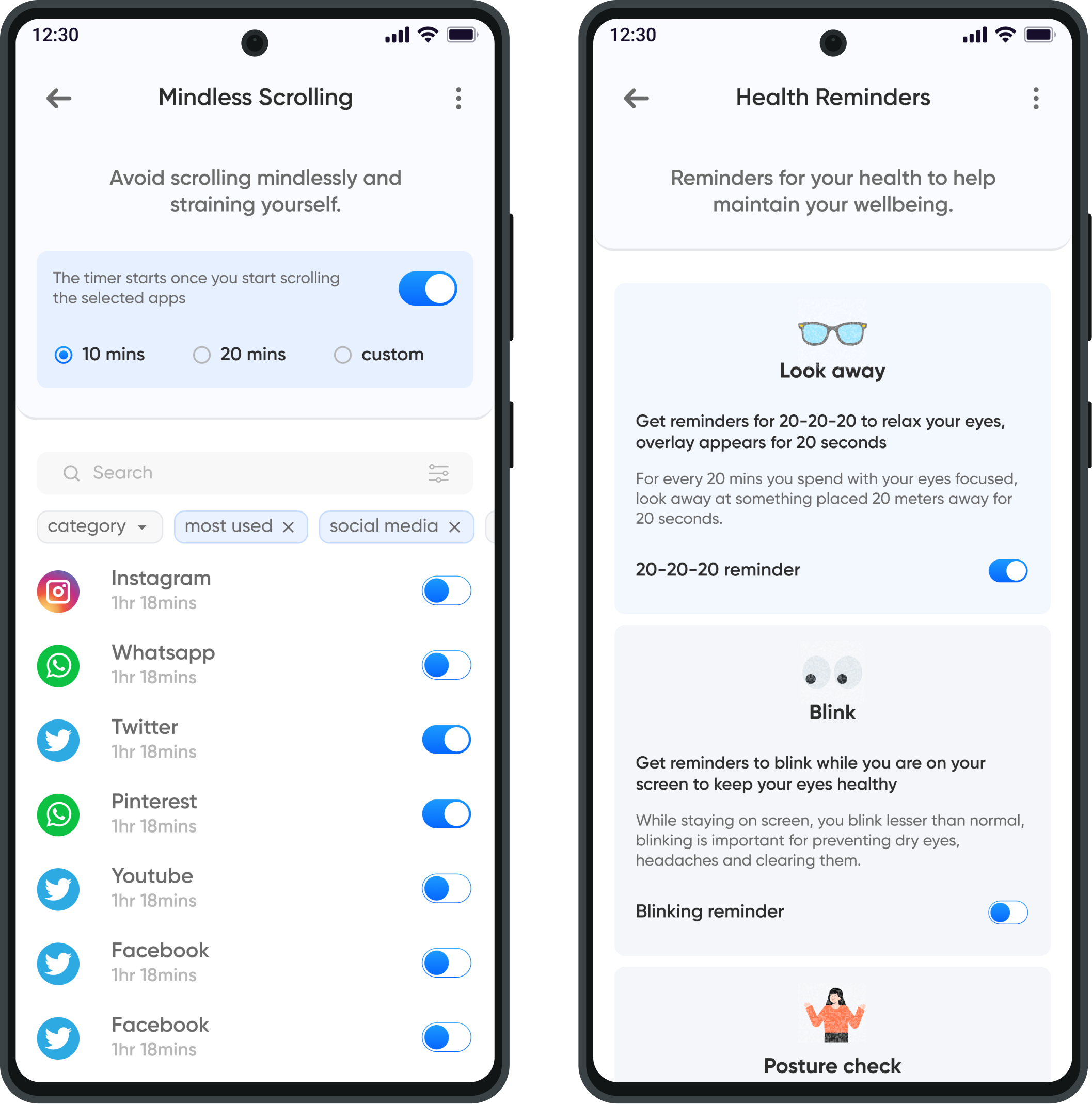
Mindless Scrolling and Health Reminders
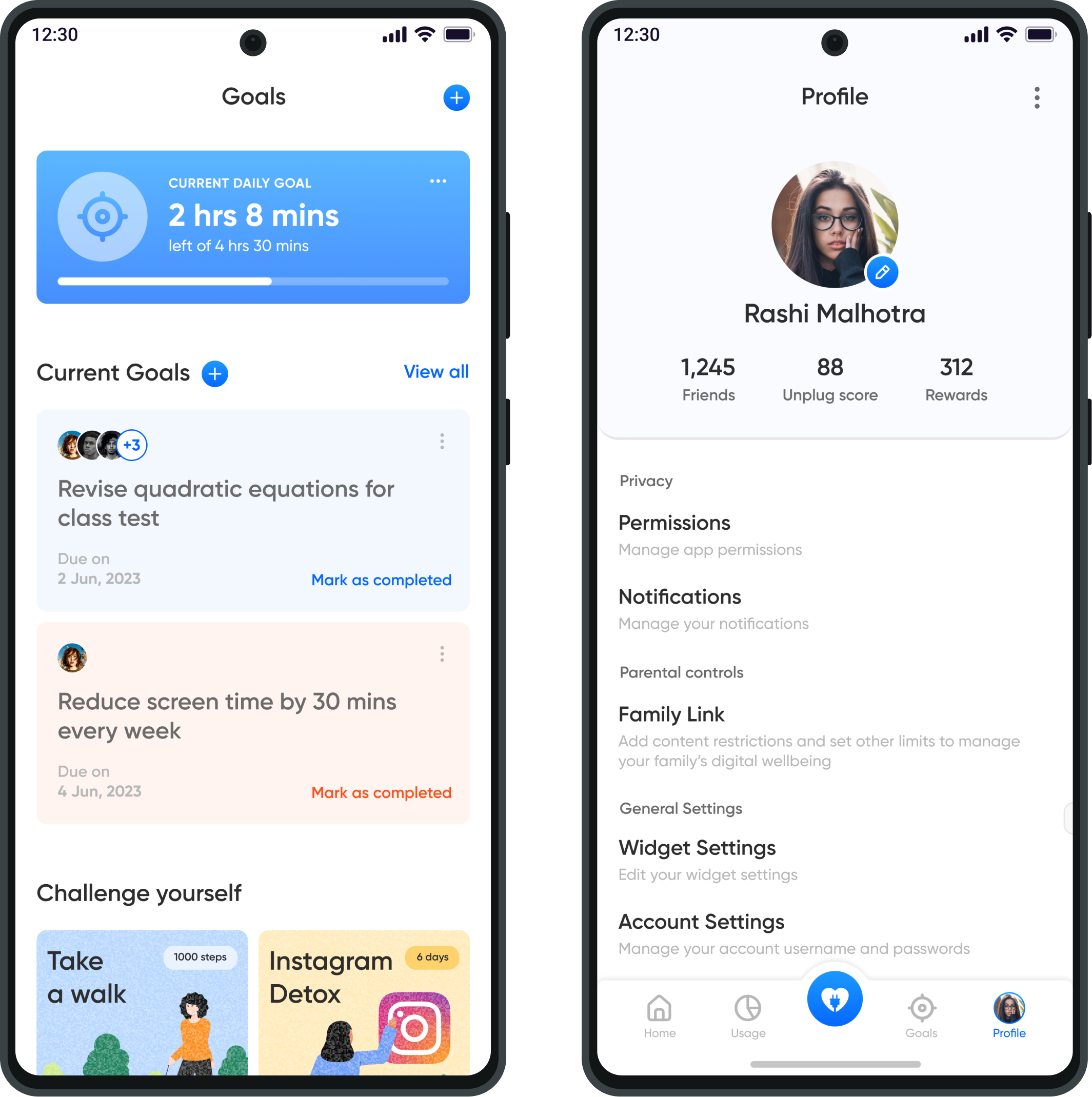
Goals and Profile
Empathize → Define → Ideate → Design → Test
Observation Testing
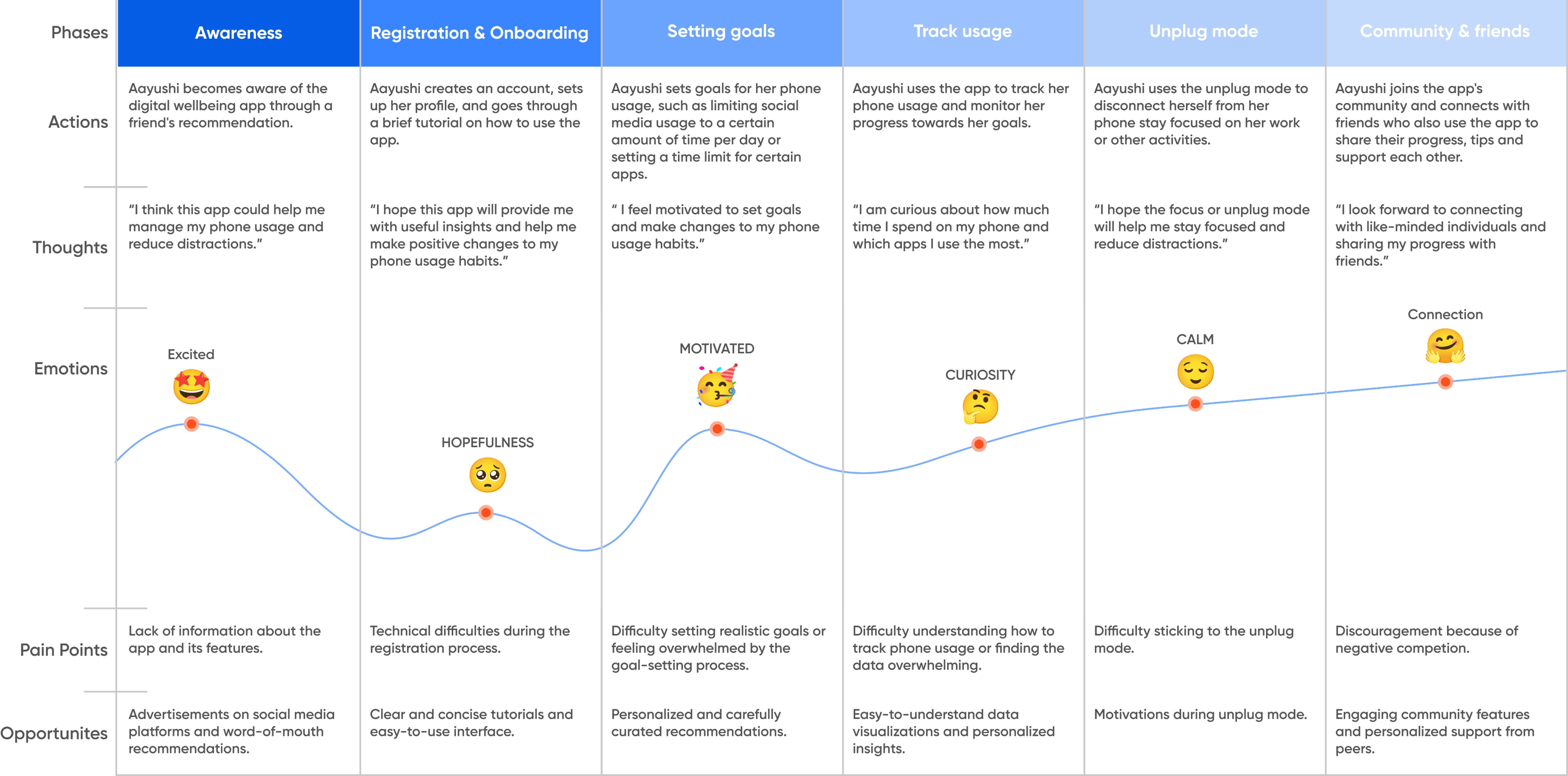
We tested our screens with 5 users from our target audience to see if they are able to navigate through the prototype smoothly. They were given a few tasks to complete and asked to think out loud while they went about doing them.
We recorded these observations as a user journey map.
Time to retrospect!
Designing and developing our experimental features to evaluate their effectiveness and how they are accepted by the users. From our research, we found that users resort to other screens, such as laptops, when their phone use is restricted. Hence expanding our solution to other screens that users are exposed to is a promising future opportunity.
During brainstorming the possible tasks which could be assigned to the user, we knew the limitations of tracking activities of our user. We could use accelerometers to track users' movement when they were outdoors. But what if they have chosen an indoor task? It is practically very non-feasible to ask the user to access them on video and audio tracking sensors.
It would be interesting if we can take this further by linking smart devices and tracking the user as they perform their activities. Technological advancements and their reach to our common user are awaited in this very case.